TechnologyBuying guide
Dashcam footage in the UK, Germany and France: what you can record, keep and post
Private dashcam use is the easy part. Posting footage is where UK, German and French rules diverge, and France still has no dashcam-specific rule. What the primary sources say.

In this guide5 sections
What you get here, in short
Recording, keeping and posting are three different acts in law, and the three countries draw the line in different places. The UK has the clearest written position: purely personal use sits outside UK GDPR, and posting publicly ends that. Germany is stricter about continuous recording but still lets short event-triggered clips serve as evidence, and its image-rights statute puts a consent requirement on distributing pictures of people. France has no dashcam-specific rule at all, and the data regulator's promised recommendations had not appeared on its page when it was checked for this article.
This is information from regulator pages, statutes, a court press release and one lawyer's article. Nobody here tested a camera or drove these roads, and none of it is legal advice.
UK: private use is outside the rules, public posting is not
The Information Commissioner's Office (ICO) says a driver who uses dashcam footage purely for personal or household purposes is outside UK GDPR. Once the driver posts it publicly, the ICO says, it is no longer purely personal use and UK GDPR applies. That answer sits in the ICO's previously-asked-questions page, in a reply about footage hosted by a vehicle manufacturer. The page is marked 'last updated 16 December 2025' as a whole, not for that answer.
Business use is stricter. The ICO's small-business page lists a lawful basis, notice to the people recorded, secure storage and a data protection fee, and suggests deleting footage after about a week unless it is needed. The ICO also says that guidance is under review because of the Data (Use and Access) Act, so the checklist may change.
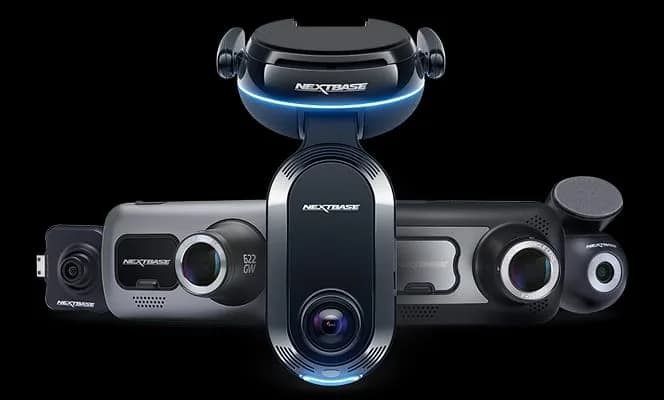
For reporting an incident, the National Dash Cam Safety Portal is run by Nextbase, a camera maker, not by the police. Its page says it is free, wants an unedited, uncompressed copy with a witness statement, does not seize your device, and is for UK users. It adds that most forces will also accept footage if you contact them directly.
Germany: short clips, not constant recording, and consent before posting
On 15 May 2018 the Bundesgerichtshof (case VI ZR 233/17) held that continuous recording with no triggering event broke the data protection law then in force. It still allowed the footage as evidence in that civil liability case, because admissibility is decided by weighing interests. The court said a short, event-triggered recording was feasible, for example overwriting footage continuously and saving only after a collision or strong deceleration. That ruling applied the pre-GDPR federal law, so it is a guide to the court's reasoning, not a statement of today's statute.
The ADAC motoring club, in an article dated 4 February 2026, still describes the regulators' line as recording only briefly and for a reason, with data saved only on events such as an accident or heavy braking. The ADAC adds that publishing images of other people or licence plates online without asking is not allowed, and that GDPR fines can reach 20 million euros or 4% of a company's annual turnover. It says it knows of no cases at that level and that fines in Hesse were in the lower range. That is a motoring club's reading, not an authority's.
The primary text on posting is the Kunsturhebergesetz. Section 22 says pictures of a person may only be distributed or publicly displayed with that person's consent. Section 23 lists exceptions, including pictures where people appear only as incidental figures next to a place, and images of assemblies and similar events. Section 23(2) removes the exceptions if a legitimate interest of the person shown is harmed. Reading those together, a clip built around one identifiable driver is not an incidental-figure case, while a wide street scene is a closer call that only a court would settle.
France: no dashcam rule yet, and what applies instead
The CNIL, France's data regulator, made dashcams the 2025 theme of its connected-vehicle compliance club and said it would draft recommendations for privately owned vehicles and put them to public consultation before adoption. Its page lists workshop minutes dated 19 June, 17 September and 6 October 2025, plus a civil-society meeting on 8 July 2025, so the programme ran past its original April to June schedule. When that page was opened for this article it linked no draft recommendation and no consultation. Its newer items concern connected-vehicle location data, not dashcams.
So France currently runs on general law. Article 9 of the Code civil says everyone has the right to respect for their private life, and judges can order measures to stop an intrusion. Article 226-1 of the Code pénal punishes recording a person's image in a private place without consent, with one year in prison and a 45,000 euro fine; the text is tied to a private place, which matters most for a parked-mode camera pointed at private property rather than for traffic on a public road.
A Paris lawyer, writing in the Village de la justice (published December 2019, updated April 2024), says the CNIL has never expressly addressed dashcams, that no text authorises or bans them, and that image rights make consent essential before footage is shown to the public. The same author argues a dashcam does not qualify for the GDPR personal-use exemption because it films outside the car. That is one practitioner's view, set against the ICO's opposite reading of its own law for UK personal use. On evidence, the author says French criminal courts accept any mode of proof, while civil courts have treated footage taken without the person's knowledge as unfair evidence, subject to a 2020 decision allowing privacy-intrusive proof where the right to evidence justifies it.
Driving across borders
None of the sources says which country's rules govern a UK driver filming in Germany or France, so the ICO's personal-use answer cannot simply be carried abroad. The portal page says UK users only and does not say whether an incident abroad qualifies. A cautious reading is to follow the stricter place on each step: keep only short event-triggered clips, keep the untouched original file, and treat posting with identifiable people or plates as the step that needs consent or blurring.
Key specs
- Checked
- 17 November 2026
- UK private use
- Outside UK GDPR if purely personal or household (ICO)
- Germany ruling
- BGH, 15 May 2018, VI ZR 233/17 (pre-GDPR law)
- Germany fine ceiling cited by ADAC
- 20 million euros or 4% of annual turnover
- France regulator output
- Workshop minutes to 6 October 2025; no draft recommendation linked
Side by side
| UK | Germany | France | |
|---|---|---|---|
| Recording for yourself | Outside UK GDPR if purely personal or household (ICO) | Short, event-triggered recording is the model; ADAC cites regulators' view | No dashcam-specific rule; general privacy law applies |
| Continuous recording | Business use: delete after about a week unless needed (ICO) | BGH 2018: not necessary and unlawful under the old law | No retention figures published; CNIL workshop topic |
| Posting online | Ends the personal-use exemption (ICO) | KUG section 22: consent to distribute pictures of people, exceptions in section 23 | Image rights and Code civil article 9; lawyer says consent is essential |
| Use as evidence | Police portal run by Nextbase, or contact the force | Admissible after weighing interests (BGH, civil case) | Criminal courts accept any proof; civil courts stricter (lawyer's summary) |
| Strength of source | Regulator pages, small-business guidance under review | Statute and court press release; ADAC is secondary | Statute texts; CNIL has no dashcam rule yet |
Private recording is the least contested step in all three countries; posting identifiable people is the riskiest.
What works
- UK position is written down by the regulator
- Germany has a statute and a court ruling to anchor the position
- France's general privacy articles are short and checkable
What doesn’t
- UK business guidance is under review
- German ruling predates GDPR, and ADAC is not an authority
- France has no dashcam recommendation, and no source covers cross-border filming
Common questions
Can I use the UK police portal for an incident in Germany or France?
The portal operator's page says it is only available to users in the UK and does not say whether an incident abroad qualifies. It also says most forces will take footage if you contact them directly.
Does handing footage to an insurer count as posting?
The ICO's line concerns posting publicly. The French lawyer's article notes that some French insurers ask policyholders for dashcam images and argues the insurer then needs its own legal basis. Your insurer and policy wording decide what is accepted.
Sources
- ICO: previously asked questions (dashcam footage answer)
- ICO: dashcams and UK GDPR, what small businesses need to know
- Nextbase: National Dash Cam Safety Portal
- Bundesgerichtshof: press release 088/2018
- Kunsturhebergesetz section 22 (gesetze-im-internet.de)
- Kunsturhebergesetz section 23 (gesetze-im-internet.de)
- ADAC: Dashcams, was erlaubt ist und was nicht
- CNIL: connected vehicles compliance club, 2025 work programme
- Legifrance: Code penal, article 226-1
- Legifrance: Code civil, article 9
- Village de la justice: La legalite des dashcams
Read next

TechnologyBuying guide
A drone under the tree: what to register and pass in the UK, EU and US
Got a drone as a present? The UK's 2026 rules, the EU's class marks and the US test and registration, read clause by clause, with a gloss on each.

TechnologyBuying guide
Annotating the care plan at the checkout: what it adds to rights you already have
A margin-note read of the checkout care plan on a laptop or TV: what UK, EU and US law already covers, and the clauses on accidental damage, excess and cancelling.

TechnologyBuying guide
Before you gift an AI gadget: nine privacy questions, annotated
A recorder's real privacy policy, read line by line: what it stores, where, for how long and how to delete it. Nine questions to ask before you gift any AI gadget.