TechnologyBuying guide
Before you gift an AI gadget: nine privacy questions, annotated
A recorder's real privacy policy, read line by line: what it stores, where, for how long and how to delete it. Nine questions to ask before you gift any AI gadget.

In this guide11 sections
- 01A gift that listens needs its small print read first
- 021. Write down everything it records, not just the audio
- 032. Find the switch that creates a voiceprint
- 043. Ask where it is processed, and by whom
- 054. Look for a retention number, and notice if there isn't one
- 065. Trace what leaves the maker's own servers
- 076. Test the delete route before you wrap the box
- 087. Check which version of the policy the recipient will land in
- 098. Treat glasses and pocket devices as blank forms until proven otherwise
- 109. Separate the household from the maker
- 11The verdict, and what the margin leaves blank
A gift that listens needs its small print read first
An AI recorder, pendant or pair of glasses arrives gift-wrapped and leaves its new owner with a standing arrangement: a company's terms, set out in a policy that few people read at the unboxing. The question underneath is plain. What does the thing record, and can the person you give it to delete it?
This piece reads one policy properly, Plaud's, because it is published in full and spells out recording, storage and deletion, and turns each line into a check you can run on any gadget. Meta's glasses and pocket devices appear where the public record is thin, and we say so. The quotes come from the companies' and the regulator's own pages; the margin notes are ours. Nobody here bought or tested anything, so this is a reading of documents, not a review of hardware.
1. Write down everything it records, not just the audio
Plaud's policy says it collects recordings, uploaded audio, photos and documents with their metadata, AI outputs, AI-agent chats, device and app data, and usage logs. Speaker labels are on the list too. Margin note: the recording is only the first item. The summaries, the chats with the assistant and the logs of how you use it are all collected as data in their own right.
This check suits anyone about to hand a recorder to a person who will use it at work or at the family table. The tip: copy the maker's collection list into a note and read it to the recipient before they switch the device on. One catch from the same policy: network data from cellular devices is said to exclude recordings and conversation content, so ask what is excluded as well as what is included.
2. Find the switch that creates a voiceprint
Plaud says it creates a voiceprint for each speaker only if speaker labelling is enabled. It destroys the voiceprint after a trigger, such as deleting the recording or turning labelling off, "in no case later than 45 days after that trigger occurs". Backups clear within 30 days. Margin note: a voiceprint identifies a person, and it can be of someone who never agreed to be in the room.
For smart speakers the UK regulator, the ICO, draws a useful line. In a smart speaker example, its guidance describes a voice ID feature that is not on by default, and says that where none is set up, ordinary voice queries are not biometric special category data. So the check is the same on any device: find the voice-recognition setting, and leave it off unless the recipient wants it. The catch is the clock. Off does not mean gone on day one.
3. Ask where it is processed, and by whom
The policy states: "We operate servers in the United States, Germany, Japan, and Singapore." Data is stored in the region matching the user's location. Margin note: that answers where, but not who. The cloud provider is not named, so the first hop is visible and the second is not.
This suits a gift going across borders, since the recipient's region decides where their files sit. Tip: check which location the account is tied to before the first recording, not after. The catch is a common one in small print: a list of countries tells you where servers are, and says nothing about who can reach them.
4. Look for a retention number, and notice if there isn't one
For recordings and transcripts, Plaud's policy gives no fixed retention period. Account data is handled on deactivation: "we will take steps to delete or anonymize this data in accordance with applicable laws." Margin note: steps, not a deadline, and anonymised is not the same as deleted. Silence on a number is itself a finding.
This one matters most for gifts to people who record sensitive talk: medical visits, legal calls, a parent's memories. Tip: if a policy has no retention number, treat everything as kept until the owner deletes it, and tell them so. This is a reading of the policy, not legal advice, and the policy text itself is what counts.
5. Trace what leaves the maker's own servers
Plaud says it sends relevant content to third-party LLM providers only to perform the task requested, and says it will not use content for AI training without explicit consent. The providers are contractually barred from training on it and keep it "for a limited period". Margin note: the period has no length. The promise is good, and the number is missing.
This check suits anyone whose recipient will upload client or school material. Tip: look for the training sentence and the consent wording together, because one without the other is half a promise. The catch is that every AI feature may add another company to the chain, so recheck the list when features are added.

6. Test the delete route before you wrap the box
Plaud lists three ways out: delete single files in the app, delete the whole account from the app menu, or unbind and reset the device. Other requests go to [email protected]. Margin note: three routes is a respectable number, but the policy gives no timeframe for recordings, so "deleted" is a button, not a promised date.
This suits every gift. Tip: find the account-delete menu in the app before the day, and tell the recipient where it is. Also separate the device from the cloud: the policy lists unbinding and resetting the device as its own route, apart from deleting files or the account, so a reset alone is not the same as clearing the account.
7. Check which version of the policy the recipient will land in
Plaud's policy applies on acceptance to accounts created on or after 20 October 2026, and to earlier accounts from 21 November 2026. A gift set up on a new account this winter starts under the newer text from day one. Margin note: dates in small print move, and the 21 November date is days away as this goes out.
This suits a recipient who already has a Plaud account: that older account moves to the new text on 21 November 2026, before most gifts are opened. Tip: note the policy date on the day of setup. The catch: the terms bind whoever holds the account, so the recipient, not the giver, is the one who needs to know when they change.
8. Treat glasses and pocket devices as blank forms until proven otherwise
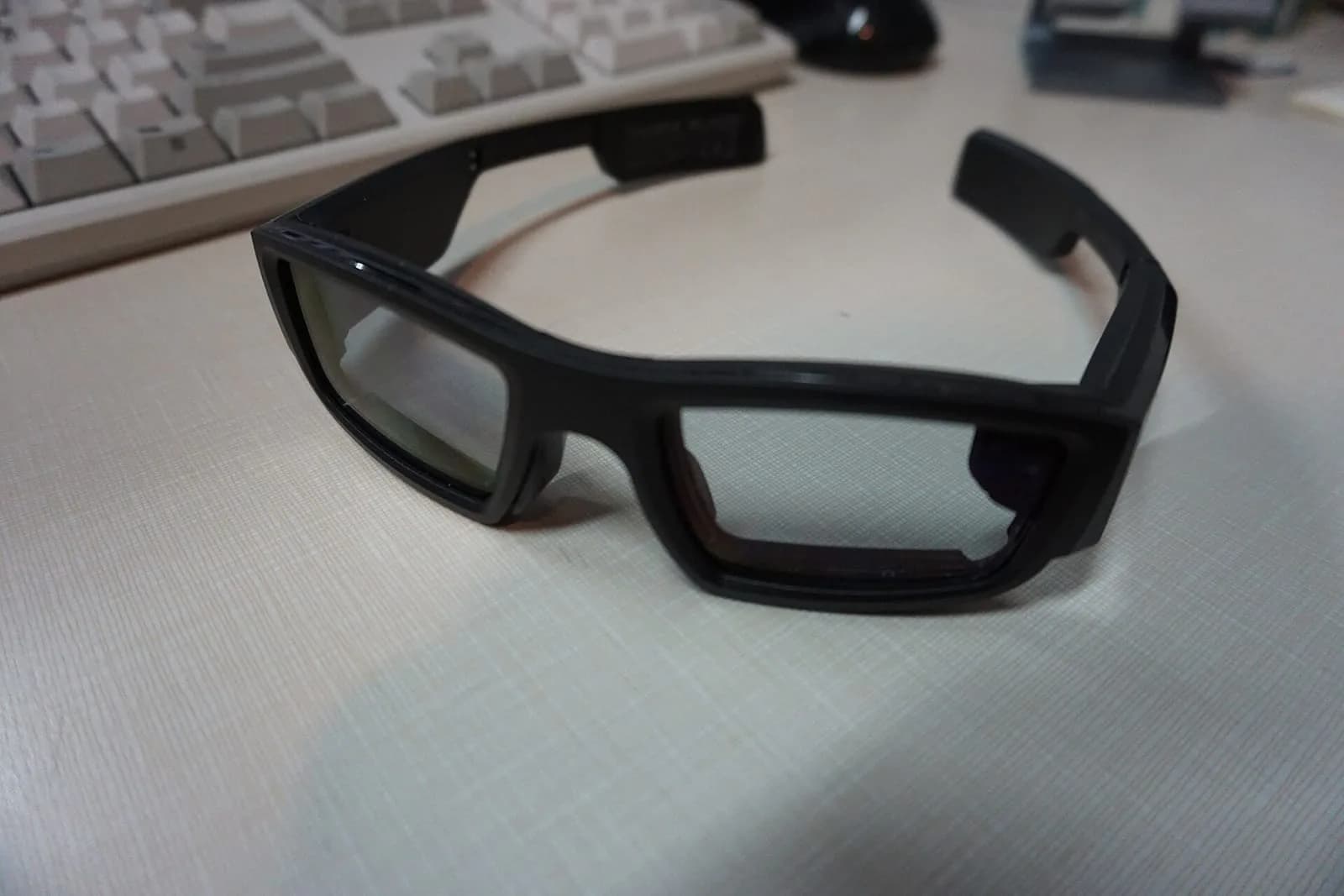
Meta's Connect 2026 recap, dated 23 September 2026, said its Ray-Ban Display "goes on sale today in Canada and the UK", with pre-orders opening in France, Italy and Germany for availability from 13 October. For the Muse Charm pocket voice device, the same September recap said only: "We'll have more to share later this year." Meta's privacy terms for these products are not covered here, so we make no claim about what they record or keep.
What the record does show is reach and mood. Forrester says Meta holds 73% of smart-glasses owners, so its terms are the ones most gift buyers will meet. It also reports that about 93% of its respondents don't own smart glasses and that "the public backlash has intensified". Muse subscriptions start at $20 a month, Forrester wrote in September 2026, and Meta is betting on that number rising. Tip: if the maker has not published retention and deletion terms, hold the gift until it has. Margin note: a camera on a face also records people who never opted in.
9. Separate the household from the maker
The ICO's consumer IoT guidance says "the UK GDPR does not cover processing by a person in the course of a purely personal or household activity". It adds that this does not exempt the provider's own processing, because that is commercial. Margin note: in the UK, your recipient's private use sits outside the UK GDPR, while the company's use of the data sits inside it.
So the question to put to the maker is the one you can actually ask: what do you do with it, and for how long? Tip: the maker's privacy contact, such as the address Plaud lists, is the place for a written request. The catch is that this is UK guidance and general information, not legal advice; other countries set their own rules.
The verdict, and what the margin leaves blank
On the one policy read in full, the verdict is mixed. Plaud is clear on voiceprints, servers and deletion routes, and silent on retention and the length of its partners' storage. A gift that passes questions 1 to 7 is a gift you can explain. A gift that cannot answer them should wait until its maker can.
Common questions
Can the person I give a recorder to delete what it recorded?
With Plaud, the policy lists deleting single files in the app, deleting the whole account from the app menu, or unbinding and resetting the device. No deletion timeframe is given for recordings, so confirm the route works before gifting.
Does an AI recorder keep recordings forever?
Plaud's policy sets no fixed retention period for recordings or transcripts. After deactivation, Plaud says it will take steps to delete or anonymise account data. Other makers may differ, so check each policy.
Does the law cover what a gifted gadget records at home?
The UK ICO says UK GDPR does not cover purely personal or household activity, but the maker's own processing is not exempt. This is general information, not advice.
Read next

TechnologyBuying guide
A drone under the tree: what to register and pass in the UK, EU and US
Got a drone as a present? The UK's 2026 rules, the EU's class marks and the US test and registration, read clause by clause, with a gloss on each.

TechnologyBuying guide
Dashcam footage in the UK, Germany and France: what you can record, keep and post
Private dashcam use is the easy part. Posting footage is where UK, German and French rules diverge, and France still has no dashcam-specific rule. What the primary sources say.
TechnologyBuying guide
Annotating the care plan at the checkout: what it adds to rights you already have
A margin-note read of the checkout care plan on a laptop or TV: what UK, EU and US law already covers, and the clauses on accidental damage, excess and cancelling.