LifestyleReview
Smoke and CO alarm rules for renters: the 2022 regulations annotated in eight questions
What a landlord in England must fit, test and repair under the 2022 alarm regulations, read clause by clause, with Scotland and Wales set alongside.
In this guide10 sections
- 01The rules are short, so the conditions are where it matters
- 021. What did the 2022 change add for tenants in England?
- 032. Which appliances count as "fixed combustion"?
- 043. How many smoke alarms must there be, and where do they go?
- 054. Does the landlord have to test the alarms before I move in?
- 065. An alarm is chirping or dead. Who sorts it out?
- 076. What happens if the landlord ignores all this?
- 087. How is Scotland different?
- 098. And what about Wales?
- 10A short note before you write to your landlord
The rules are short, so the conditions are where it matters
The Smoke and Carbon Monoxide Alarm (Amendment) Regulations 2022, SI 2022 No. 707, run to only a few pages. They don't stand alone, either: they amend the 2015 England regulations and leave most of that text in place. Nearly every sentence carries a condition. Which room, which appliance, which day, who has been told.
This piece reads the text the way you'd pencil a tenancy agreement: quote the clause, then note in the margin. There are eight questions a tenant might ask. England comes first, because that is where the 2022 amendment applies, then Scotland and Wales, which run on their own rules. Nobody here has inspected a property or tested an alarm. The answers come from the regulations and the government guidance, and this is general information, not legal advice.
1. What did the 2022 change add for tenants in England?
A carbon monoxide alarm in any room used as living accommodation that contains a fixed combustion appliance, except gas cookers. The new duty took effect on 1 October 2022. Before that, regulation 4(1)(a)(ii) of the 2015 regulations reached only rooms with a solid fuel burning combustion appliance, so a gas or oil boiler in a living space triggered no CO alarm duty under those regulations. The 2022 change also brought homes let by registered providers of social housing into the rules, so the smoke and CO duties now reach social tenants as well as private ones.
Margin note: the phrase to underline is "any fixed combustion appliance, except gas cookers", as gov.uk's landlord booklet states it. The cooker exception is the clause people skip. If the only thing burning fuel in your home is a gas hob, the regulations simply don't require a CO alarm. If a fixed boiler, stove or fire burns fuel in a room you live in, they probably do.
2. Which appliances count as "fixed combustion"?
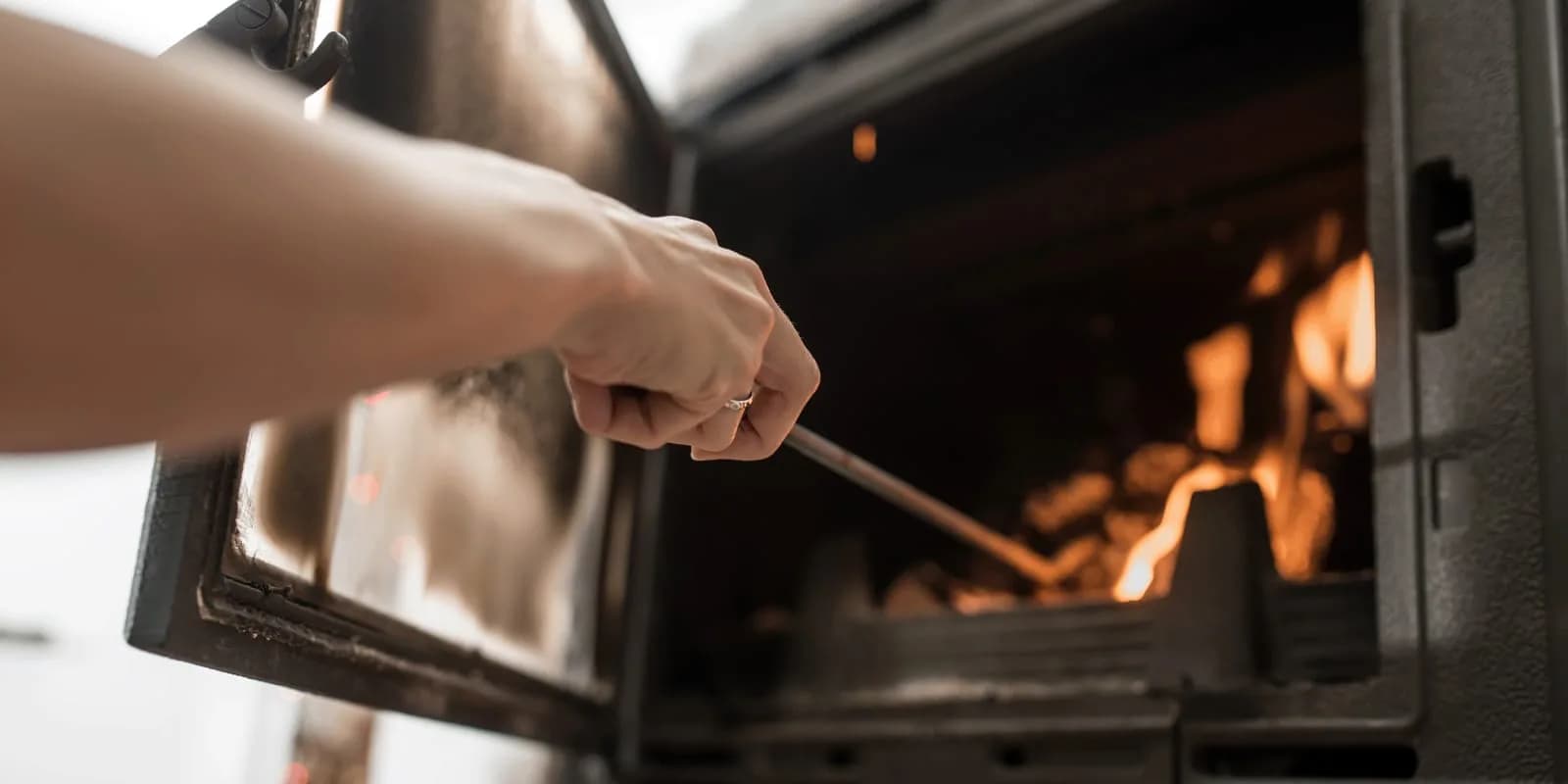
Gov.uk says a fixed combustion appliance burns fuel of any type to produce heat, and gives gas or oil boilers and log-burning stoves as examples. A gas cooker is "any apparatus heated by gas and used for cooking food". A decorative fireplace that doesn't work doesn't count.
Margin note: the room test matters as much as the appliance. Regulation 4(2) of the 2015 text counts a bathroom or lavatory as living accommodation, so a boiler tucked into a bathroom falls inside the rule. A practical tip: list every room with a boiler, stove or other burner, then ask your landlord to match the alarms to that list.
3. How many smoke alarms must there be, and where do they go?
At least one on each storey used as living accommodation. That comes from regulation 4(1)(a)(i) of the 2015 regulations. Gov.uk adds that a mezzanine is not a storey, and that smoke alarms belong on the ceiling in a circulation space such as a hall or landing.
Catch: the placement advice is guidance, not regulation text. For carbon monoxide alarms, gov.uk's guidance puts them at head height on a wall or shelf, roughly 1 to 3 metres from the likely source. In both cases it says to follow the manufacturer's instructions, so the leaflet in the box is the last word on a particular model.
4. Does the landlord have to test the alarms before I move in?
Yes, for the day the tenancy starts. Regulation 4(1)(b) requires the landlord to make sure each prescribed alarm is in proper working order on the day a new tenancy begins, with checks made by or on behalf of the landlord. The guidance treats a new tenancy as one starting on or after 1 October 2022. A renewal of an earlier agreement is not a new tenancy.
Margin note: that renewal exception is easy to trip over. If you simply rolled on from an older agreement, the day-one test isn't triggered by the renewal. Landlords are expected to keep records, and gov.uk gives a tenant-signed inventory as one example. Before you sign, look for a line in the inventory that names the alarms and says they were working.
5. An alarm is chirping or dead. Who sorts it out?
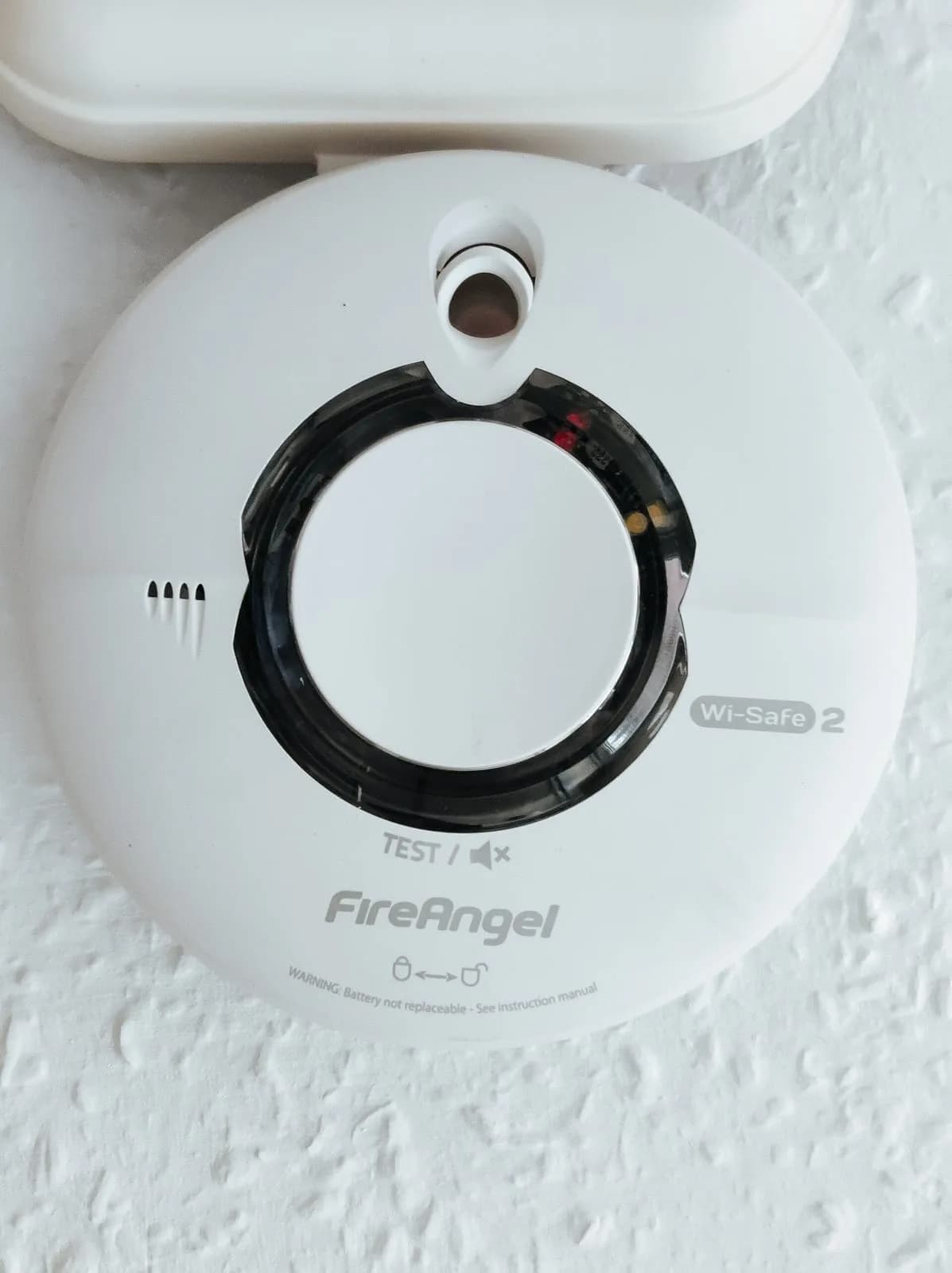
Tenants are asked to replace the batteries first. If the alarm still fails, or you can't change the batteries, you report it to the landlord, who must then repair or replace it. Gov.uk calls "sealed for life" batteries "the better option" for battery-powered alarms, which is a hint worth passing on if a landlord is replacing units anyway.
Catch: the duty bites once the landlord has been told. A report that exists in writing is easier to point to later than a remark on the stairs. And don't expect the guidance to say when an alarm is too old. Gov.uk gives no lifespan or replacement period for smoke or CO alarms, so manufacturer instructions are the only reference it points to.
6. What happens if the landlord ignores all this?
Enforcement runs through the local housing authority, in three steps. The council serves a remedial notice (regulation 5), the landlord must comply with it (regulation 6), and the council can arrange the work itself (regulation 7). Where a landlord has breached the duty to comply, regulation 8(2) says "The amount of the penalty charge must not exceed £5,000."
Margin note: read the order of events. The penalty attaches to failing to comply with a remedial notice, and the council decides that on the balance of probabilities (regulation 8(1)). It isn't a fine for the first missing alarm. How a particular council handles a report, and whether a case succeeds, is for the council and, if it comes to it, a housing adviser or lawyer, not for a blog.
7. How is Scotland different?
Scotland's rule has applied since 1 February 2022, when fire detection moved into the tolerable standard. On that date the older gov.scot guidance for private landlords stopped having effect, and landlords are now pointed to Chapter 16 of the Scottish Government's tolerable standard guidance, "Satisfactory Fire Detection". The detail below comes from that older gov.scot page, so check Chapter 16 for the current wording. On the older page's terms, Scotland asks for more devices than England does. Ceiling-mounted smoke alarms go in the living room and in each hallway or landing on every storey, plus a heat alarm in every kitchen. They must be interlinked, hardwired or wireless, so all sound when any one is activated.
Margin note on power and standards: mains alarms with battery backup are allowed, as are tamper-proof long-life lithium alarms showing a visible expiry date. The guidance lists BS EN 14604 for smoke alarms, BS 5446-2 for heat alarms and BS EN 54-29 or BS EN 14604 for multi-sensor alarms. One gap to flag: that gov.scot page doesn't cover CO alarms, so look to Chapter 16 and the Scottish Government's current guidance on that point before assuming either way.
8. And what about Wales?
Wales' duties start with the Renting Homes (Wales) Act 2016 on 1 December 2022. There must be at least one smoke alarm on every storey, connected to the mains and linked to the other required alarms. A CO alarm is needed in any room with a gas, oil or solid fuel appliance that the landlord installed. If only the contract-holder installed the appliance, none is required, though the parties can agree to fit one.
Margin note on timing: for a new occupation, both kinds of alarm must be present from the occupation date. For contract-holders already in the home on 1 December 2022, CO alarms were due from that date and smoke alarms by 1 December 2023. A breach makes the dwelling unfit for human habitation. The gov.wales guidance, last updated on 21 November 2024, mentions no fine. A contract-holder can seek advice, ask a court to decide, or claim damages under section 99 of the Act, and the page cautions against withholding rent. Take advice before acting.
A short note before you write to your landlord
Quote the clause, name the room, ask for the date of the test. That turns a vague worry into a specific request, and it keeps the conversation on what the text says rather than on what anyone assumes.
Regulations get amended and guidance gets reissued. The gov.uk landlord booklet still gives 29 July 2022 as its last update, so on anything that matters to your tenancy, check the current legislation text and ask your council's housing team.
Side by side
| England | Scotland | Wales | |
|---|---|---|---|
| In force | CO extension from 1 October 2022, on top of the 2015 duties | From 1 February 2022 (tolerable standard) | From 1 December 2022; smoke alarms for existing contract-holders by 1 December 2023 |
| Smoke alarms | One on each storey used as living accommodation | Ceiling-mounted, in the living room and each hallway or landing | At least one on every storey, mains-connected |
| Heat alarm | Not among the regulation 4 duties | In every kitchen | Not mentioned in the gov.wales guidance |
| CO alarms | Any room with a fixed combustion appliance, except gas cookers | Not covered by the guidance page used here | Any room with a landlord-installed gas, oil or solid fuel appliance |
| Linking and power | Battery or mains; sealed-for-life batteries called the better option | Interlinked, hardwired or wireless | Required alarms linked; extra alarms may be battery-powered |
| If breached | Remedial notice; civil penalty up to £5,000 for failing to comply | Not covered by the guidance page used here | Dwelling unfit for human habitation; court or damages route; no fine mentioned |
Sources
- The Smoke and Carbon Monoxide Alarm (Amendment) Regulations 2022 (SI 2022 No. 707), as made
- The Smoke and Carbon Monoxide Alarm (England) Regulations 2015, regulation 4
- The Smoke and Carbon Monoxide Alarm (England) Regulations 2015, regulation 8
- Smoke and carbon monoxide alarms: Q&A booklet for the private rented sector, landlords and tenants (gov.uk)
- Smoke and carbon monoxide alarms: explanatory booklet for landlords (gov.uk)
- Fire safety guidance for private rented properties (gov.scot)
- Fitness for human habitation: guidance for tenants and contract-holders (gov.wales)
Read next

LifestyleBuying guide
Is there a UK ticket resale cap yet? What's law today and what's still a plan
Is there a legal cap on UK ticket resale prices yet? Official texts show a government plan, not a law in force. Here is what is law today and what is not.

LifestyleFirst look
'Compatible with': the legal limit printed on a capsule box
A capsule box may name another brand's machine because EU trade mark law allows it, if the use is honest. The wording, annotated in the margin.

LifestyleFirst look
When the heating fails in a rented home: what the landlord must do, and how fast
Heating broken in a rented home in England? Section 11 of the 1985 Act sets the repair duty, 'reasonable time' has no fixed number, and Awaab's Law is not yet for private renters.