LifestyleFirst look
'Compatible with': the legal limit printed on a capsule box
A capsule box may name another brand's machine because EU trade mark law allows it, if the use is honest. The wording, annotated in the margin.
In this guide5 sections
Start with the line on the box
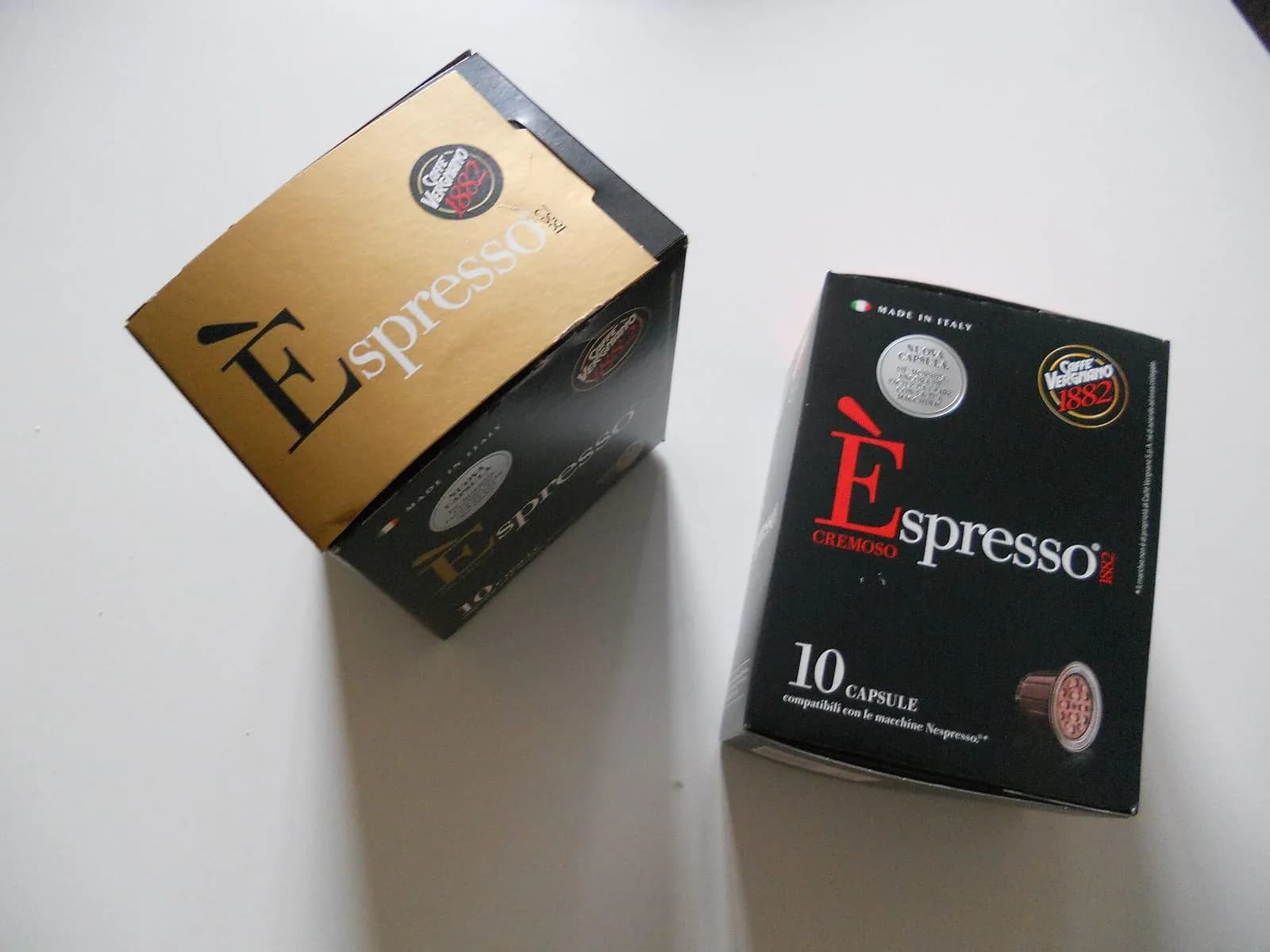
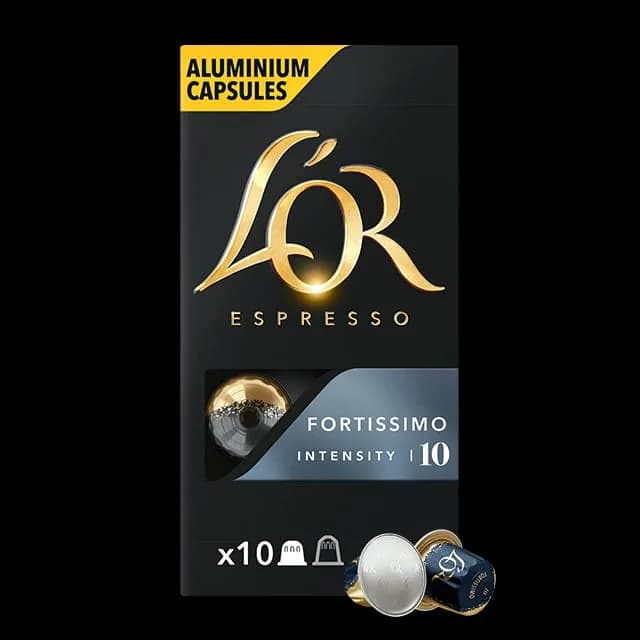
Turn a capsule box over and, near the small print, you'll often find a sentence naming a machine the capsule maker doesn't make. On one French retailer page for L'OR Espresso capsules it reads: "Les capsules L'OR Espresso sont compatibles avec votre machine à café L'OR BARISTA ® et Nespresso ®". It looks like a courtesy to the shopper. It's closer to a boundary marker.
Margin note: that sentence is the one place on the pack where a rival may use someone else's trade mark. The verb, the little ® symbol and the footnote that follows are all shaped by a legal exception. What follows annotates that exception a clause at a time. It's general information, not legal advice.
Why a rival may say another brand's name at all
A trade mark lets its owner stop others from using the sign in trade. Taken alone, that would leave a capsule maker unable to say which machine its product fits, and the shopper guessing from the shape of the pod. EU law carves out room. Article 14(1)(c) of Regulation (EU) 2017/1001, adopted on 14 June 2017 and published two days later, lets a third party use an EU trade mark to refer to goods as the proprietor's where that is necessary to indicate their intended purpose, "in particular as accessories or spare parts".
Margin note: capsules aren't named in the article, but a pod made for one machine reads naturally as an accessory in that sense. That's our reading, not a quoted ruling. Two phrases carry the weight: "necessary" and "intended purpose". The rival's name may appear to say what the pod is for. It isn't there to decorate the pack or borrow the other brand's glamour.
The same instinct shows up outside the EU. The Swiss Federal Supreme Court, in a decision reported in October 2021, invalidated Nestlé's 3D shape trade mark for the Nespresso capsule. It held the shape technically necessary and, quoting the EU Court of Justice, said trade mark law "is an essential aspect of, and must contribute to, a competitively functioning free market". Different mark, different country, different question. But the thread is the same: a mark isn't meant to wall off a whole category.
The condition hiding in paragraph 2
The permission comes on a leash. Article 14(2) says the exception applies only where the use is "in accordance with honest practices in industrial or commercial matters". The text lists no banned phrases, so what follows is a plain reading of it, not a court's catalogue.
Margin note: this is where small print earns its keep. The words don't say a disclaimer is compulsory. But a line saying whose mark the name is, and that there's no link between the makers, is the plainest way to show the use is honest.
Fits the exception: naming the machine, plainly, to say the capsule is meant for it.
Fits the exception: saying the name is another company's mark and that the capsule maker has no connection to it.
Points the wrong way: wording or design suggesting the machine maker made, approved or stands behind the capsule.
Points the wrong way: making the rival's name the main attraction rather than a statement of fit.
One product page, annotated
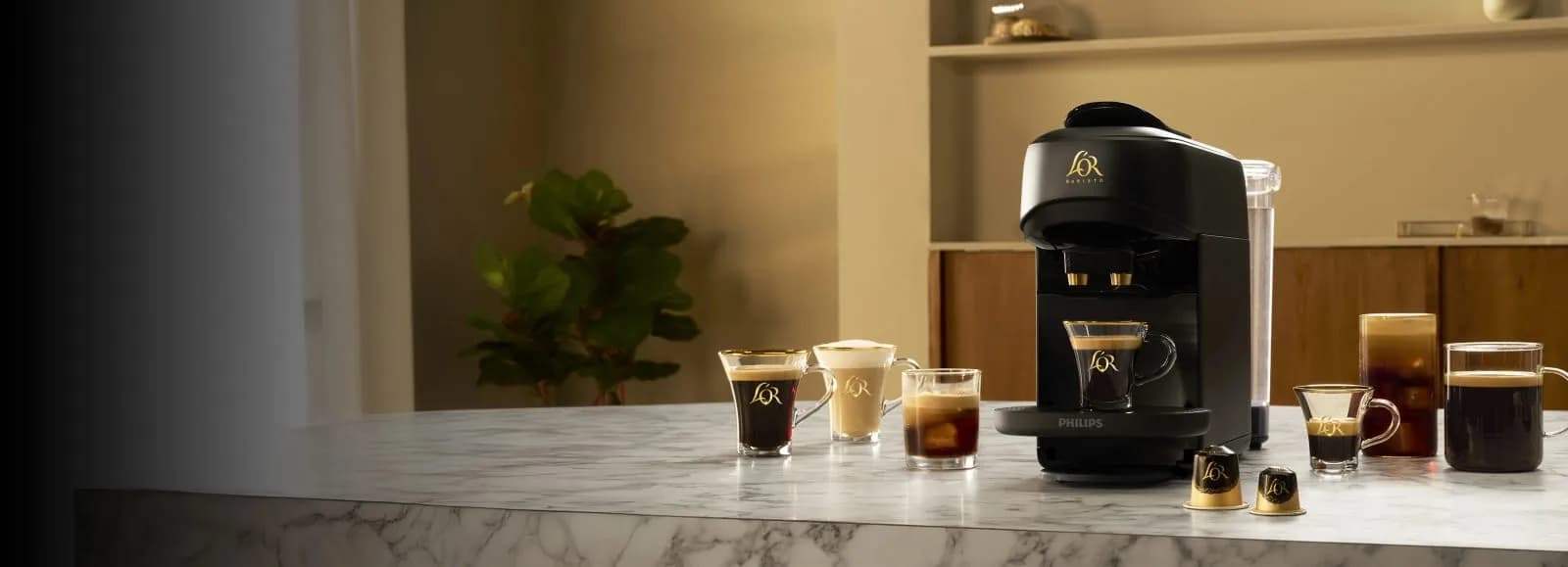
Back to the French page. The retailer prints the sentence quoted at the top, and adds a footnote saying Nespresso is a third-party mark with no link to Jacobs Douwe Egberts, the company behind L'OR. Taken apart, it has three working parts.
Margin note on wording: this is how the retailer's page prints it, not the maker's own site. L'OR's Spanish homepage, by contrast, carries the line "Hechas para tu cafetera" and a footer link labelled "Compatibilidad", with no comparable statement or disclaimer on the page itself. So the exact words vary by country and by pack, and the one printed on your box is the one that counts.
"sont compatibles avec": a statement of fit, which is the intended purpose Article 14(1)(c) speaks of.
"L'OR BARISTA ® et Nespresso ®": the maker's own machine and the rival's, each named as a name, with the symbol marking the second as somebody's registered mark.
The footnote: the disavowal of any link, the plainest sign on the page that the use is meant to meet the honest-practices condition.
What 'compatible' promises, and what it doesn't
It promises fit: the capsule is meant for that machine. It doesn't promise approval, an identical cup, or a warranty from the machine maker. Nor does it promise every model. L'OR itself lists exclusions, for example U, Expert and Prodigio machines bought after 25 July 2016, so "compatible" is the start of a check, not the end of one.
There's also a separate question the trade mark exception doesn't answer: may a buyer use third-party capsules in the machine at all? That's another door. In Nestec v Dualit, the UK High Court (Mr Justice Arnold, 22 April 2013, [2013] EWHC 923 (Pat)) dismissed Nestlé's infringement claims against Dualit's compatible capsules and said: "It follows that the purchaser must be impliedly licensed to obtain and use capsules with the machine." That's patent reasoning, not trade mark reasoning.
The verdict from the margin: a box that names a machine is speaking within limits. When the line is plain, says whose mark it is and claims no relationship, it's doing what the exception permits. When it hints at kinship, it's testing the honest-practices condition. The wording quoted here comes from the 2017 regulation as adopted, so check the current consolidated text and your national law; in a real dispute, a lawyer or a court decides.
Common questions
Does 'compatible with Nespresso' mean Nespresso approves the capsule?
No. It's a statement of fit. On a French retailer's page for L'OR capsules, a footnote says Nespresso is a third-party mark with no link to Jacobs Douwe Egberts.
Can any brand put another machine's name on its box?
Only within Article 14 of Regulation (EU) 2017/1001: where necessary to indicate intended purpose, and in accordance with honest practices. Whether a particular pack passes is for a court, not a blog.
Does the wording guarantee the capsule works in every model?
No. The rule governs how the name may be used, not whether every machine accepts the pod. L'OR lists exclusions such as U, Expert and Prodigio models bought after 25 July 2016.
Sources
- Regulation (EU) 2017/1001 as adopted (Articles 14(1)(c) and 14(2))
- Regulation (EU) 2017/1001 overview
- Nestec v Dualit [2013] EWHC 923 (Pat)
- Swiss Supreme Court invalidates Nestlé's Nespresso capsule shape mark (IPKat)
- L'OR Espresso capsules compatible Nespresso, Auchan product page
- L'OR Espresso Spain homepage
Read next

LifestyleBuying guide
Is there a UK ticket resale cap yet? What's law today and what's still a plan
Is there a legal cap on UK ticket resale prices yet? Official texts show a government plan, not a law in force. Here is what is law today and what is not.

LifestyleFirst look
When the heating fails in a rented home: what the landlord must do, and how fast
Heating broken in a rented home in England? Section 11 of the 1985 Act sets the repair duty, 'reasonable time' has no fixed number, and Awaab's Law is not yet for private renters.

LifestyleReview
Smoke and CO alarm rules for renters: the 2022 regulations annotated in eight questions
What a landlord in England must fit, test and repair under the 2022 alarm regulations, read clause by clause, with Scotland and Wales set alongside.