LifestyleBuying guide
The federal hemp definition, annotated: total THC, the 0.4 mg cap, and when it applies
The amended federal hemp definition, read line by line: total THC including THCA, a 0.4 mg per-container cap, and why most of it starts December 11, 2026, not November 12.
In this guide5 sections
What does the new definition say about THC?
It replaces the old delta-9 test with a total THC test. The amended text asks for a "total tetrahydrocannabinols concentration (including tetrahydrocannabinolic acid) of not more than 0.3 percent", measured on a dry weight basis.
Margin note: the parenthesis carries the weight. THCA now sits inside the count, so a label that reports only delta-9 answers a different question from the one the statute asks. Binoid's homepage, for instance, says all its Delta products contain less than 0.3% THC "per the Controlled Substances Act". That is a different measure from the one now written into the definition.
A sourcing note, since this is a piece about reading closely. The quotes here follow the Cornell Legal Information Institute copy of 7 U.S.C. 1639o and Congressional Research Service (CRS) reports. The official public law text is the version of record, so check it before quoting any of this.
What is the 0.4 mg cap, and what counts as a container?
It is a ceiling on finished products, counted in milligrams per retail unit. The amended definition excludes final hemp-derived cannabinoid products with "greater than 0.4 milligrams combined total per container of" total THC, including THCA, and cannabinoids with similar effects. Products at or under the cap are not excluded by that clause.
The statute defines a container as "the innermost wrapping, packaging, or vessel in direct contact with a final hemp-derived cannabinoid product in which the final hemp-derived cannabinoid product is enclosed for retail sale to consumers." Its examples are a jar, bottle, bag, box, packet, can, carton or cartridge. Bulk shipping containers and non-essential outer wrappings are left out.
Margin note: two details are easy to skip. The unit is the container, not the serving. And the figure is an absolute number of milligrams, not a percentage. One law-firm summary paraphrases the cap as "per package"; the statute's defined term is "container", and that is the word to hold on to.
Margin note on scope: the clause applies to final products. A separate clause sets a 0.3 percent combined total for intermediate products, and intermediate products marketed or sold as a final product or directly to consumers are excluded outright.
When does it apply: November 12 or December 11?
For most of the amendments, December 11, 2026, according to the two most recent CRS reports. A CRS report dated September 28, 2026 says the effective date for portions of the definition "has been delayed until December 11, 2026." A CRS Legal Sidebar dated October 28, 2026 says the delay covers "most of the amendments to the hemp definition."
The statute as first written ran 365 days from enactment of Pub. L. 119-37, which lands on November 12, 2026 (the law-firm alerts date enactment to November 12, 2025). CRS attributes the later delay to P.L. 119-103. One provision stayed on the original clock: the one about cannabinoids not capable of being naturally produced by the cannabis plant, which CRS says still starts on November 12, 2026, a date that has just passed.
Margin note: the statute lists two separate exclusions here. One covers cannabinoids "not capable of being naturally produced" by the plant. The other covers cannabinoids that are capable of being naturally produced but "were synthesized or manufactured outside the plant." The CRS Legal Sidebar puts only the first on the November 12 clock. Saul Ewing reads the new exclusions for cannabinoids not naturally derived from the plant as reaching delta-8 THC and HHC, and Akerman describes the synthesized-cannabinoid exclusion as applying regardless of concentration. Which of the two clauses covers a given compound decides whether its date is November 12 or December 11.
Margin note: alerts from Akerman (November 14, 2025) and Saul Ewing (November 18, 2025) describe a 365-day delay and a November 2026 start. They were accurate when written and are now out of date on the date. The sources also name the enacting measure differently: CRS and the statute's notes cite Pub. L. 119-37, approved November 12, 2025, while Akerman names the Continuing Appropriations and Extensions Act of 2026.

What does this change for products sold online?
The definition decides what counts as hemp under federal law. Age checks and shipping come from other layers, and the sources here give a few data points, not a full map.
Texas DSHS adopted emergency rules on October 2, 2025 that bar consumable hemp licensees and retail registrants from selling to anyone under 21, with a valid government-issued photo ID required before purchase. Its page does not address online sales specifically, and we did not survey other states.
USPS Publication 52, section 453.37, permits domestic mailing of hemp products with CBD at or below 0.3% THC only when the mailer meets set conditions. Those include complying with federal, state and local law and keeping records for at least three years after mailing. The same section says hemp and hemp-based products, including CBD, are prohibited in international mail. The page shows no edition date and does not say how the carrier will read the new cap.
Seller pages show the layering in practice. Binoid's site opens with a 21+ age gate. It says it does not ship Delta products to CA, OR, AK, WV, WA or CO, and it lists twelve states where THC-A products are not available for shipment. Those are the retailer's own undated statements, not checked against current state rules.
How can I read a product page against this?
Treat this as a reader's checklist, not advice. Whether a particular product fits the definition is a question for the statute's text and a qualified professional.
Find the unit. The cap is milligrams of total THC per innermost container, so a percentage alone does not answer it.
Check which THC is named. Delta-9-only wording speaks to the old test; total THC including THCA is the new one.
Check the date. Material written in 2025 may carry a November 2026 timeline, while the later CRS reports say December 11, 2026 for most amendments.
Read the age and shipping lines. A 21+ gate and a list of excluded states are the seller's rules, and state and carrier rules sit alongside them.
Treat "legal" as a claim to check. Binoid's homepage banner says "100% Legal THC", while its shipping policy says Delta-8 products will only be sold in states where the sale is legally allowed. The two lines do not carry the same weight.
Common questions
Is the 0.4 mg cap per serving?
No. The statute's wording is "per container", defined as the innermost packaging in direct contact with the final product for retail sale. A serving size does not appear in that clause.
Does the cap apply to the shipping box?
The statute says bulk shipping containers and non-essential outer wrappings are not containers. The innermost retail packaging, such as the jar, bottle or cartridge, is what counts.
Is the definition change already in force?
Partly, per CRS. Most amendments are delayed to December 11, 2026, while the provision on cannabinoids not capable of being naturally produced by the plant started November 12, 2026.
Sources
- 7 U.S.C. 1639o, definitions (Cornell Legal Information Institute)
- CRS In Focus IF13136, hemp definition (2026-09-28)
- CRS Legal Sidebar LSB11496 (2026-10-28)
- Akerman client alert on the hemp-derived THC provisions (2025-11-14)
- Saul Ewing alert on the hemp THC products ban (2025-11-18)
- USPS Publication 52, section 453.37 Hemp-Based Products
- Texas DSHS Consumable Hemp Program
- Binoid homepage
- Binoid shipping policy
Read next

LifestyleBuying guide
Is there a UK ticket resale cap yet? What's law today and what's still a plan
Is there a legal cap on UK ticket resale prices yet? Official texts show a government plan, not a law in force. Here is what is law today and what is not.
LifestyleFirst look
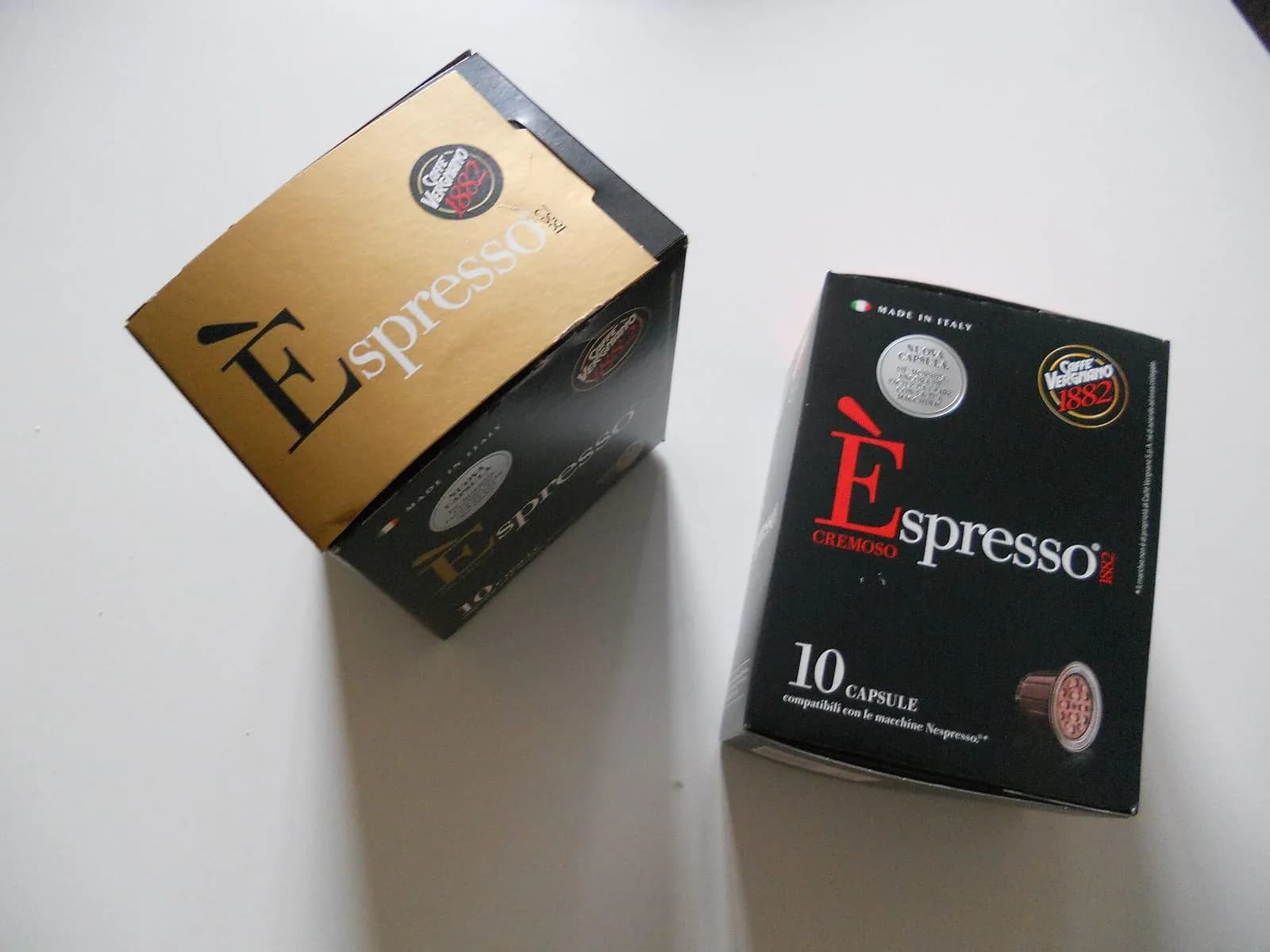
'Compatible with': the legal limit printed on a capsule box
A capsule box may name another brand's machine because EU trade mark law allows it, if the use is honest. The wording, annotated in the margin.

LifestyleFirst look
When the heating fails in a rented home: what the landlord must do, and how fast
Heating broken in a rented home in England? Section 11 of the 1985 Act sets the repair duty, 'reasonable time' has no fixed number, and Awaab's Law is not yet for private renters.