HealthBuying guide
How to Choose Earplugs for Sleeping While Travelling: A Buying Guide
Fit and material matter more than the biggest number on the box. How to read the ratings, what each price tier buys, and what to skip for hotels, dorms and flights.
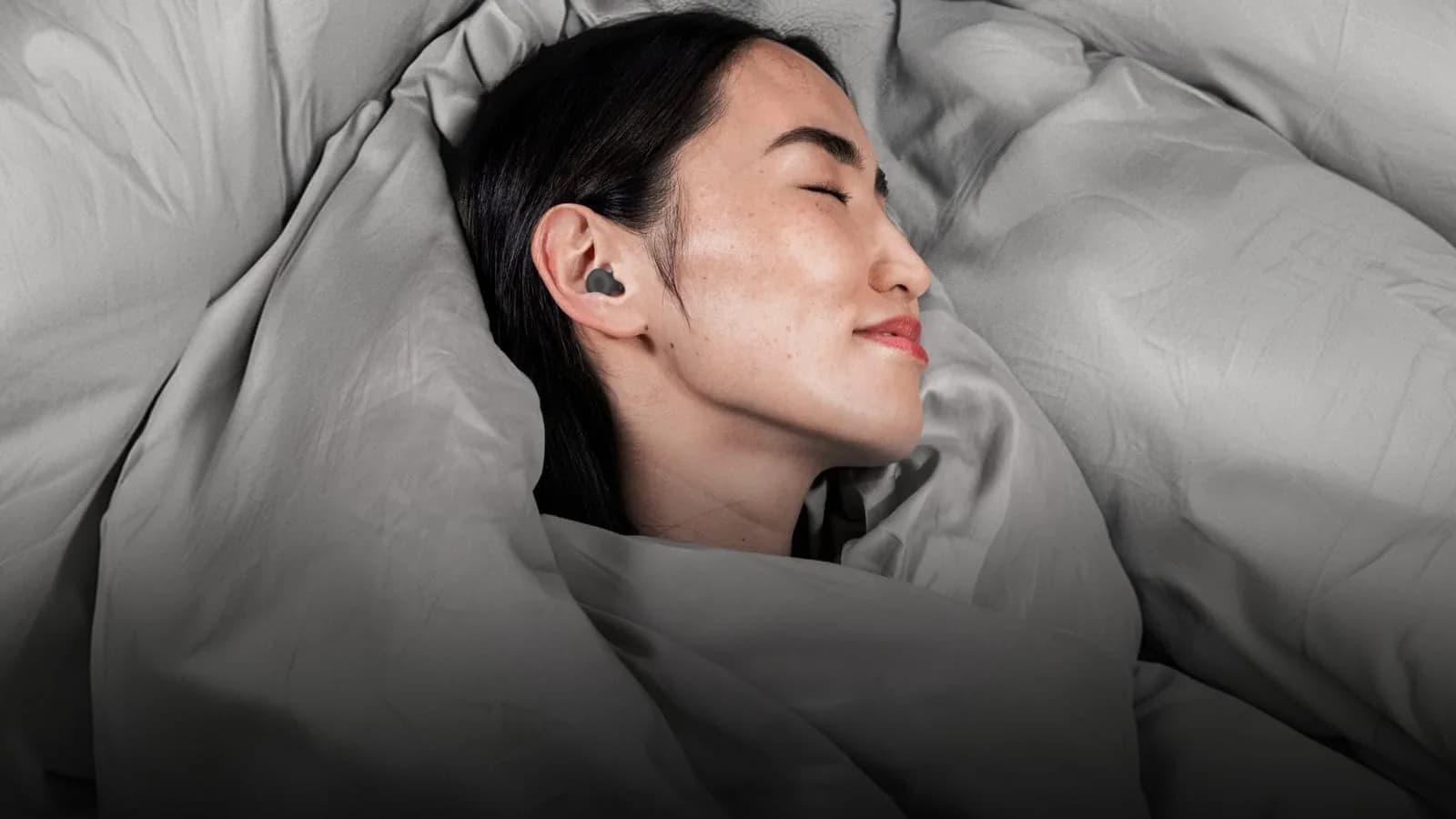
In this guide6 sections
Start with where you will be sleeping
Street traffic outside a hotel, a snorer in a hostel dorm and the hum of an aircraft cabin are different problems, so no single pair suits all of them. Her Packing List's 2020 travel roundup splits its picks into flying plugs and sleeping plugs, and that split is the first decision to make.
The questions Which? asked in its overnight tests, last updated in July 2026, also work well for shoppers: is the plug comfortable lying on your side, is it easy to insert, does it stay in all night, and how much snoring, traffic and radio noise does it stop?
Hotels and guesthouses: comfort over several nights matters most, so reusable silicone or a mouldable plug is a sensible default.
Hostel dorms: Her Packing List names snorers and late-arriving roommates as the main problem, which favours stronger blocking and a fresh, clean pair.
Overnight flights: decide whether your issue is noise or ear pressure, because products aimed at pressure are not always the strongest at blocking sound.
The criteria that matter
Fit comes first. Sleep Foundation says finding the right pair often takes trial and error, and that sizing kits and multiple tip sizes help. If you sleep on your side, look for a low-profile shape: Sleep Foundation describes Loop and Hears models as not protruding from the ear, which suits side sleepers.
Material decides how the plug feels, how long it lasts and how much cleaning it needs. Some earplugs contain latex, so Sleep Foundation advises people with a latex allergy to check the label.
Silicone: Which? describes it as reusable, lightweight and non-porous, so it resists sweat and bacteria and washes with soap and water. Prices vary more here than in any other category.
Foam: cheap, soft and usually disposable. Which? notes the porous material can harbour bacteria and needs frequent replacement, and it considers foam better for one-off jobs than for sleep.
Wax: warmed and moulded to seal the canal, which Which? says can give a tighter fit, but it can feel greasy and pick up dirt and fluff. Which? and Sleep Foundation treat wax as mostly single-use, while Her Packing List gives about three to five uses for Ohropax.
Custom-moulded: fitted to your ear, from around £80 according to Which?, and potentially lasting years.
How to read NRR, SNR and decibel claims
NRR (noise reduction rating) is the US figure and SNR (single number rating) is the EU equivalent, according to SoundGuys. They are not interchangeable. SoundGuys lists Mack's Pillow Soft at NRR 22 and SNR 30, and Curvd Everyday at NRR 15 and SNR 30. The same SNR sits beside two different NRRs, so check which scale a number uses before comparing boxes. SoundGuys' 2024 page also shows Loop Quiet at both "up to 27 dB" and NRR 14, which is the kind of gap to look out for.
For scale, Sleep Foundation says earplugs typically fall between 22 and 33 dB NRR, and Which? reports claimed reductions of 16 to 38 dB, with the models it tested averaging around 27 dB.
A label is a laboratory number, not a promise. In a 2014 Canadian Audiologist article, engineer Alberto Behar quotes a draft standard saying NRR "substantially overestimates" the attenuation achieved in the field. Workplace safety bodies cut the figure for this reason: Behar describes OSHA applying a 50% factor to all protector types, and NIOSH subtracting 50% for formable earplugs and 70% for other earplugs. By that arithmetic, a plug labelled NRR 33 works out at roughly 16 to 17 dB, and a non-formable plug labelled NRR 26 at about 8 dB under the NIOSH method.
These are occupational methods, and the same draft standard warns that none accurately predicts what an individual will experience. The practical lesson is modest: a three-point gap between two labels tells you little, while a plug that fits your ear and stays in tells you a lot.
What to pay for and what to skip
Pay for options that reduce the risk of buying the wrong fit. Ozlo includes four tip sizes with Sleepbuds 2 and offers 30-day returns, and Loop's store lists 100-day returns on Quiet 2. Sleep Foundation also notes that reusable plugs usually save money if you wear them nightly, so frequent travellers can justify a better pair than someone who takes one trip a year.
Skip paying extra for the biggest number alone. Which? makes the point that the highest rating is not always the right choice. Be wary too of claims that come without a recognised rating: phrases such as "full noise cancellation" and "up to 100 dB" appear among the product descriptions on Sleep Foundation's list, and neither tells you what an NRR or SNR would. Dedicated flight plugs are also poor value if pressure is not your problem. Her Packing List lists EarPlanes at NRR 20 and FlyFit at NRR 17, well below the NRR 33 it gives for Howard Leight MAX-1 foam.
Price tiers
Prices below were seen in October 2026 and are rounded. US prices come from Sleep Foundation's list unless stated, and they change often.
Under $1 a pair: bulk disposable foam. Sleep Foundation says these can cost under 25 cents a pair. Good for dorms and short trips, as long as you replace them.
Around $10 to $20: entry-level reusables. Sleep Foundation says reusable pairs often cost around $10, Dryft mouldable silicone is around $18 for 12 pairs, and Loop's store lists Quiet 2 at around €20.
Around $35 to $50: sleep-specific silicone. Swanwick's kit is around $35, ZQuiet around $39, Hears around $41 and Loop Dream around $50.
Around $80 and up: sleep earbuds. 1MORE Z30 is around $80, and Ozlo lists Sleepbuds 2 at around $279. Which? puts smart plugs at roughly £50 to £250.
From around £80: custom-moulded plugs. In a Which? survey, 79% of custom-plug users rated them very or extremely effective, against 36% for disposable or reusable ones. That measures satisfaction, not decibels, and it requires a fitting before you leave.
Common mistakes and safe use
Experts generally consider earplugs safe when used as directed, Sleep Foundation reports, but how you use them matters. Regular use may contribute to earwax buildup, which it links to dizziness, tinnitus, itchy ears or hearing difficulties. Healthline adds that wax buildup or bacteria on plugs can lead to ear infections.
See a doctor if you have pain or discomfort, or an existing ear condition, before continuing to use plugs. Which? says hearing-aid wearers should avoid nightly plug use. A doctor can also remove earwax safely, so do not try to dig it out yourself. This guide is general information, not medical advice.
Pushing too deep: Healthline says to insert a plug only far enough to block sound, and Sleep Foundation warns that deep insertion or fast removal can injure the canal.
Stretching the life of foam: Which? says not to reuse disposables many times. Healthline suggests replacing them every few days and washing them if reused. Sources differ, so err towards fresh pairs.
Rough insertion: Healthline's steps are to roll the plug between clean fingers, gently pull the earlobe away from your head, insert, and hold a hand over the ear while foam expands.
Trying them for the first time on the trip: fit takes trial and error, so test a pair at home while you can still swap it.
Forgetting the alarm: Sleep Foundation says you may be less likely to wake for an alarm or a crying child. Check you can hear your alarm with plugs in, and think twice if you are the one responsible for a child at night.
Improvising: Which? warns against using cotton wool or tissue, which can get stuck.
Never taking a break: Which? advises giving ears regular breaks.
Side by side
| Howard Leight MAX-1 | Ohropax Classic Wax | ZQuiet | Loop Dream | Ozlo Sleepbuds 2 | |
|---|---|---|---|---|---|
| Type | Disposable foam | Mouldable wax | Flexible silicone with pressure-equalising chamber | Soft silicone | Sleep earbuds with silicone tips |
| Stated noise reduction | NRR 33 (Her Packing List) | NRR 23 (Her Packing List) | Up to 27 dB (Sleep Foundation) | About 27 dB (Sleep Foundation) | No dB figure; passive isolation plus masking audio, no active noise cancelling |
| Reuse | Single use | About 3 to 5 uses (Her Packing List) | Reusable; comes with a cleaning brush | Reusable | Up to 14 hours per charge, plus 2 to 3 case recharges (Ozlo) |
| Travel fit | Light and cheap to carry in multiples | Needs warming and moulding; can pick up fluff | Sleep Foundation's travel pick | Sleep Foundation's comfort pick; does not protrude | Needs charging; phone needed for setup |
Common questions
Are flight earplugs good for sleeping on a plane?
They are built mainly for pressure, not maximum quiet. Her Packing List lists EarPlanes at NRR 20 and Mack's Flightguard at NRR 26, and notes that lower-rated options still let you communicate. If sleep is the goal and pressure does not bother you, a standard sleep plug may block more. For recurring ear pain when flying, ask a doctor or pharmacist.
Is a higher NRR always better for sleep?
Not on its own. Which? notes the highest rating is not always the best choice, and workplace methods cut the labelled figure substantially because real-world performance falls short of it. A plug that fits and stays in overnight may serve you better than a higher number that hurts.
Can I reuse foam earplugs during a trip?
Only briefly. Which? says not to reuse disposables many times because the porous foam can harbour bacteria. Healthline suggests replacing them every few days. Pack enough pairs to change them often.
Are sleep earbuds better than earplugs for travelling?
They do a different job. Ozlo says Sleepbuds 2 use passive isolation plus masking audio and have no active noise cancelling, with up to 14 hours per charge in its own testing at 50% volume. They suit people who prefer sound to silence, but they cost far more and need charging, while plugs need neither.
Sources
- Which? – Best ear plugs for sleeping
- Sleep Foundation – Best earplugs for sleep
- Healthline – Sleeping with Earplugs: Benefits, Side Effects, Safety Tips, and Types
- SoundGuys – Best earplugs for sleeping
- Canadian Audiologist – The (in)famous NRR: new derating
- Her Packing List – Best earplugs for travel
- Ozlo – Sleepbuds product page
- Loop Earplugs – Loop Quiet 2 product page
Read next
HealthBuying guide
“99.99% effective” on the box: reading the footnotes on oral-care claims
Oral-care percentages often rest on a lab test or a narrow comparison. Here is what the ASA and FTC say, what the Cochrane review found, and how to read the footnotes.
HealthBuying guide
Light box claims annotated: what 'clinically proven' and 'medical grade' allow
A light box's wording sits in regulated territory. Six myths about what the box says, from 'clinically proven' to '10,000 lux', checked against MHRA, ASA and NHS guidance.
TechnologyBuying guide
A drone under the tree: what to register and pass in the UK, EU and US
Got a drone as a present? The UK's 2026 rules, the EU's class marks and the US test and registration, read clause by clause, with a gloss on each.